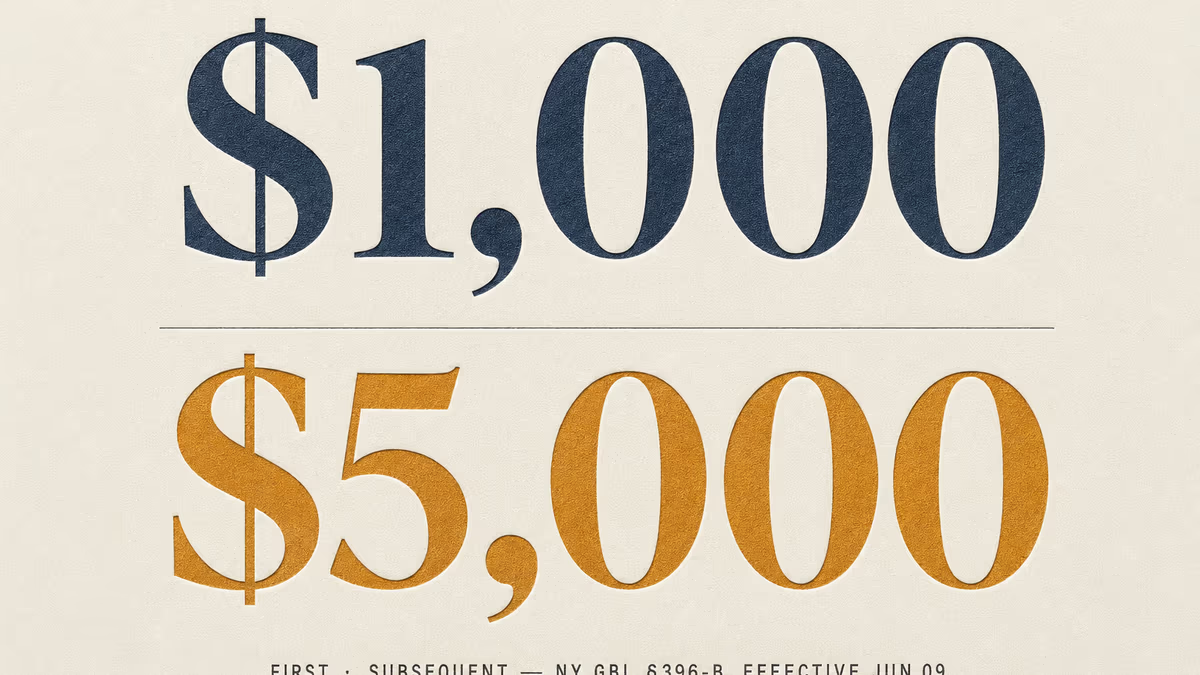
New York’s first-in-the-nation synthetic-performer disclosure law takes effect June 9, exposing any brand or agency that produces a New York-distributed ad with an undisclosed AI-generated performer to civil penalties of $1,000 for a first violation and $5,000 for each repeat. The mandate, signed by Governor Kathy Hochul in December as Chapter 617 of 2025, amends General Business Law §396-b and reaches the country’s largest media market with no private right of action — enforcement runs through the state.
The trigger is “actual knowledge.” Any person engaged in the business of dealing in property or services who produces or creates a commercial ad using a synthetic performer must “conspicuously disclose” that fact, the bill text reads. The statute carves out audio-only ads, AI used solely for language translation of a human performer, ads and promotional materials for expressive works (motion pictures, TV, streaming, video games) where synthetic-performer use mirrors the underlying work, and pure media distributors that did not create the spot, a publisher safe harbor that preserves Section 230 dynamics. Cooley reads the “any software algorithm” language broadly enough that traditional VFX could trigger coverage, not only generative AI.
What the bill does not say is what “conspicuous” looks like. The statute is silent on form, language, placement, size, and duration, and the New York Attorney General has not issued guidance. That vacuum makes the IAB’s AI Transparency and Disclosure Framework, released this past January, the operational standard by default. The voluntary framework pairs a consumer-facing label layer (badges, icons, watermarks) with a machine-readable metadata layer built on C2PA content credentials, the open provenance standard Adobe, Microsoft, the BBC, Intel, Arm, and Truepic founded five years ago. “We must get transparency and disclosure right, or we risk losing the trust that underpins the entire value exchange,” IAB CEO David Cohen said in the framework release.
The compliance lift for buyers is concrete. Cooley advised advertisers to inventory campaigns using digital humans, avatars, or simulated spokesperson content; update creative review checklists to flag synthetic-performer uses; and tighten contracts with agencies, production studios, and AI vendors to require upfront identification and allocate disclosure responsibility. Vendors including Synthesia, Adobe Firefly, and Vibe.co produce the kind of creative the law is built around; whether their default outputs ship NY-compliant disclosure metadata or push the burden into the media-trafficking layer is the open operational question.
Two federal contingencies frame the runway. President Trump’s executive order, signed the same day as the NY law, created a DOJ AI Litigation Task Force and ordered the FTC chair to issue a state-AI-law preemption policy statement within 90 days, a March deadline that lands before New York’s effective date. And EU AI Act Article 50’s deepfake-disclosure obligation becomes enforceable across the EU on August 2, 54 days after the NY rule takes effect — the first time a US sub-federal mandate sets compliance ahead of the European baseline.